The Gardens that Grew Me, Squashed Plans, and a Seasonal Recipe

Our homestead is right on the border of what is considered north central farmland and Northwoods Wisconsin. This week it looks more like Little House on The Prairie than Little House in The Big Woods. Switch grass seed heads are blowing in the wind across the gravel roads, reminiscent of tumbleweeds. Chaff and dust from the neighboring corn and bean harvests make the air feel heavy. Smokey the Bear reminds me each drive into town that fire danger is high. Most deciduous trees have taken their final bow for the season; bright yellow tamaracks have stolen the show.
On the way to my son’s preschool, lining the curbs, are mounds of plastic bags filled with leaves. I hit the brakes and pile the bags into the back of my truck. More fuel for the compost pile. I laugh to myself, wondering if my son will grow up with this being a core memory.
This is the third November on our homestead and the third year that I haven’t grown squash or pumpkin. Our first year didn’t leave me much of a chance. We moved in on August 17th, and the first frost was September 7th.
Second year, I had good intentions. I hauled wheelbarrow after wheelbarrow of compost to a 50x25ft plot. I made trenches for asparagus as quick as I could, knowing that I would thank myself in 3 or 4 years. The heavy clay soil and recurrent torrential down pours proved to make for a less-than-ideal garden season. I truthfully cannot recall growing much of anything that year besides herbs and lettuce. I was warned by the neighbors it would take a few years of amending the soil to grow vegetables well. They also told me between the numerous springs and clay soil I would rarely have to water. Three years later, I can attest to that statement.
Behind the main garden is a flat, south facing, well-draining plot of mostly clover. I envisioned sprawling vines, Cinderella pumpkins and delicata squash curing in the sun while sunflowers grow tall overhead. I wanted to grow the French pumpkins that made warts look good. I imagined my son running to the patch to pick out a few favorites to decorate his room.
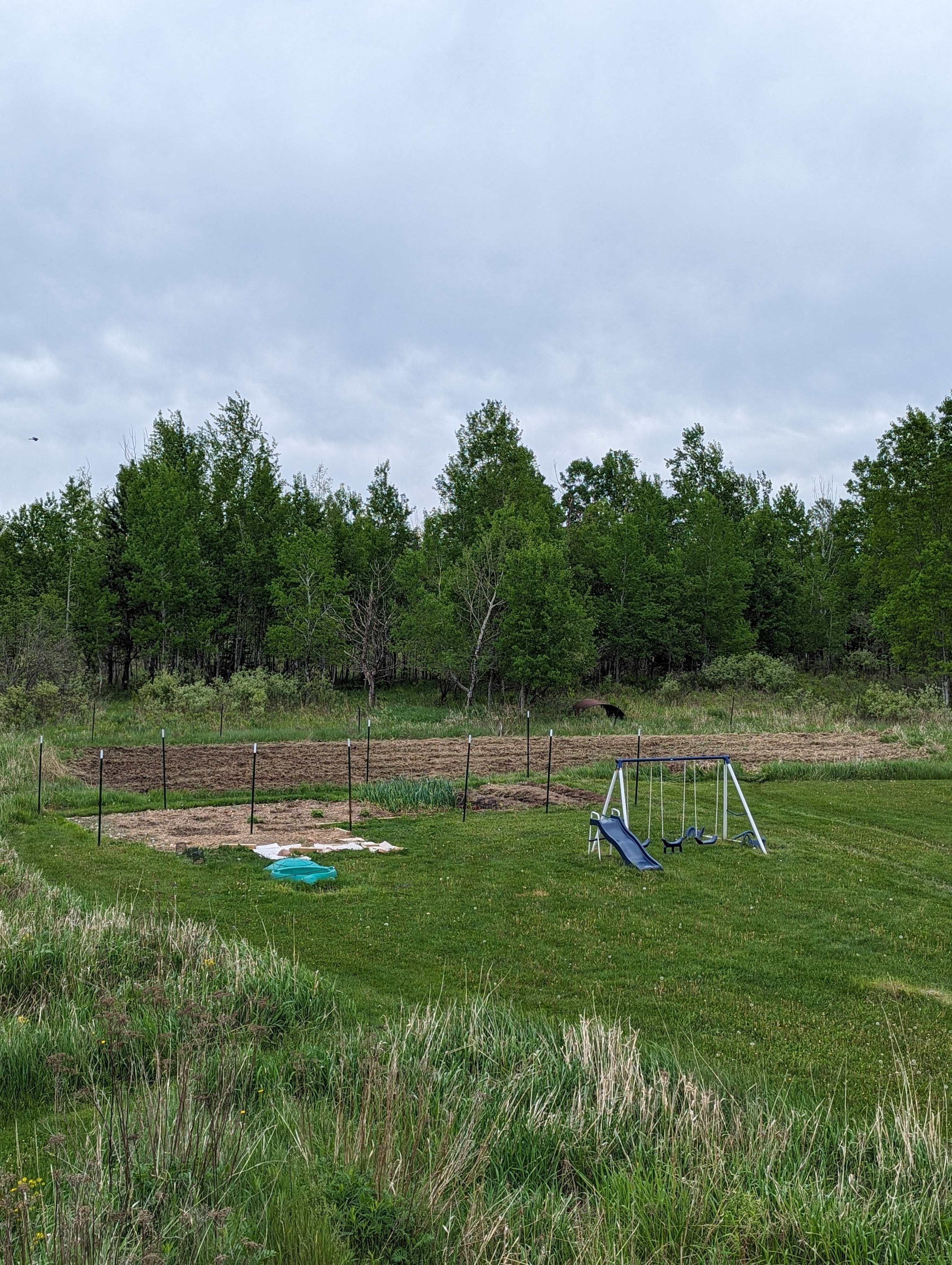
One of my neighbors graciously offered to brush hog and till the area. After that, with bare hands and a hopeful heart I formed two-foot mounds of amended soil and sowed 4 or 5 seeds per mound. With a deer femur I found in the woods, I created shallow rows and sowed a variety of sunflowers. The rain fell later that day and I figured I was about 110 days away from pumpkin soup.
Not a single pumpkin or squash sprouted. Turns out rabbits and birds really love to eat seeds. The sunflowers didn’t do much better. ONE sunflower came to fruition. This was nothing I experienced before.
I became a mother and a gardener the same year. My instincts to nurture really took over and I even wanted my hobbies to rely on me to live. My first Mother’s Day gift was a raised bed garden built by my husband. It was an “E” shaped structure of cinderblock and wood. We filled each bed with a mix of aged cow manure from a local farm, mushroom and leaf compost. I zip tied a cattle panel to T posts through the middle to support my future tomatoes and cucumbers.
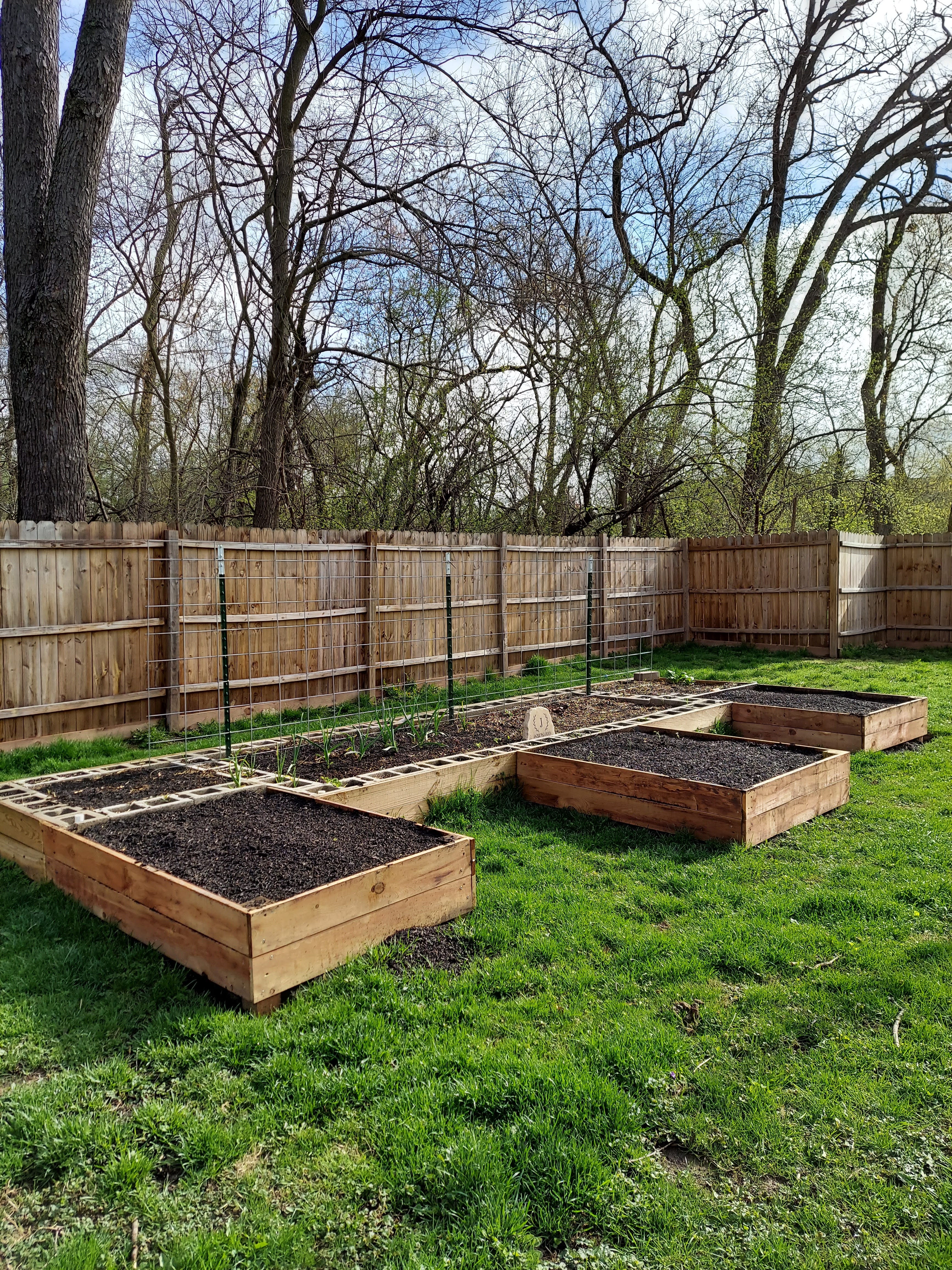
When I embrace a hobby or lifestyle, I go all in. Therefore, dog eared seed catalogs laid on my nightstand, seedlings in solo cups took over my utility room, breastfeeding sessions were accompanied by garden how-to videos, and I dreamed of more land. That first year I grew tomatoes, cucumbers, peppers, herbs, lettuce, carrots, parsnips, cauliflower and lots of other greens. I warred against Japanese beetles, aphids and flea beetles but overall had a motivating season.
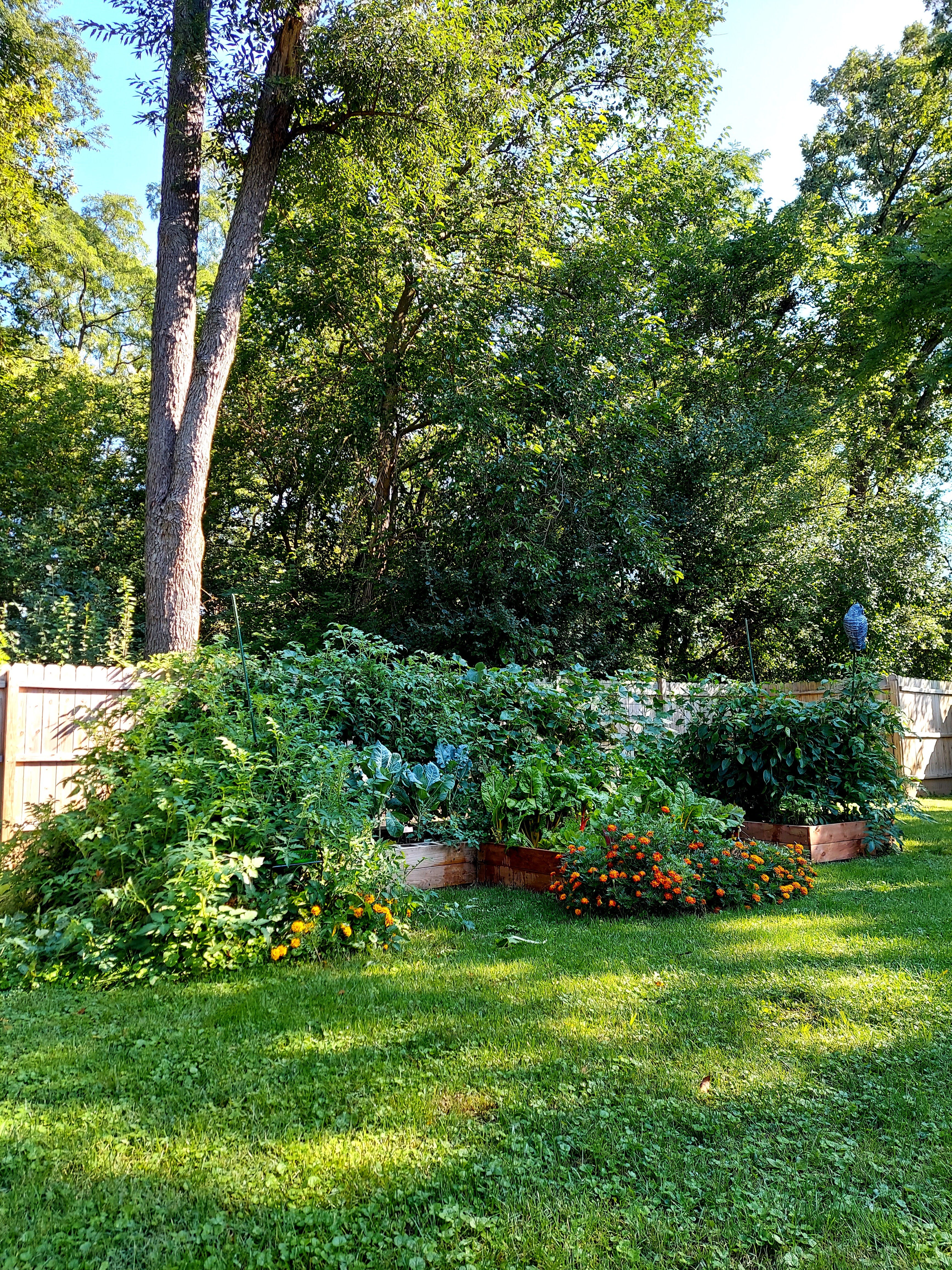
What space didn’t allow for were the sprawling type veggies— the pumpkins, squash, watermelon. My love for growing something was now deeper than the harvests, I desired to grow just to grow. To gain experience growing what my raised beds couldn’t support, I started volunteering at my church in their garden. Or rather, what would be their garden.
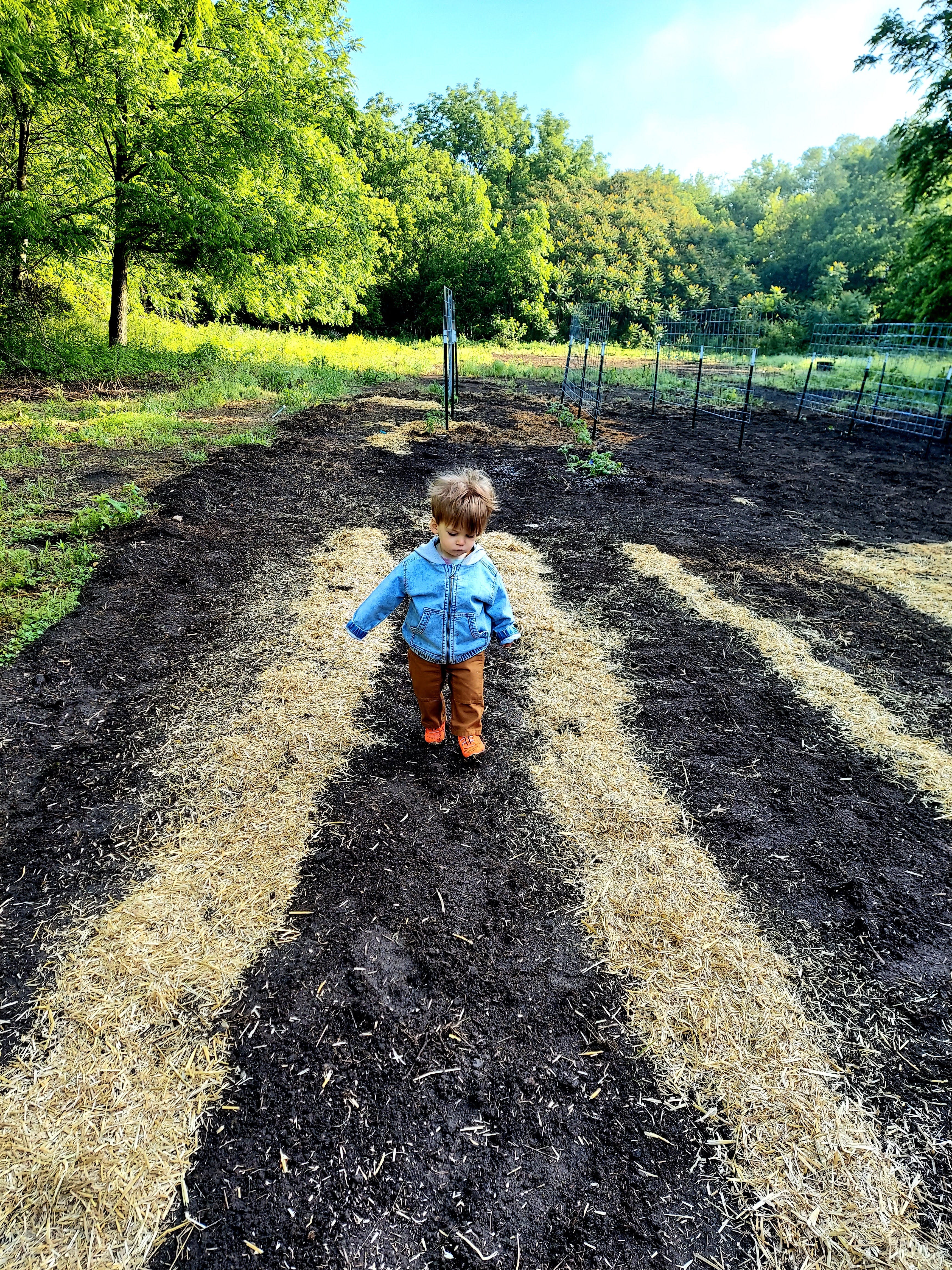
Behind the church was an acre of land that years ago was a baseball field. Not a single remanent of a baseball field was left but the soil was left sandy. It was a blank slate, with limited volunteers and few guidelines. I could volunteer whenever, bring my son along and grow basically what I wanted. It was the perfect learning experience.
The plot of land was cleared and tilled and shortly after, I made mounds of soil and sowed squash, pumpkins and watermelons. Some of the smaller squash I sowed beside cattle panels.
With the support of the church, and many hands, ideas that I wanted to implement such as mulching, vertical growing, companion planting, were able to come to fruition.
What could not happen that year was a fence, and the deer took full advantage. Shortly after the watermelon sprouted, they were eaten to the ground. It was as if they vanished. One plant survived and did give the food pantry a few beautiful watermelons. We tried wolf urine as a natural fence, but it required reapplication after each rain and was just not possible with the limited volunteers. Plus, it was gross. The first delivery leaked inside the church mailbox—maybe not my best idea. The squash and pumpkins went absolutely nuts. Thankfully, because they were basically the only veggies to survive the herds of deer coming through each day.
Here is the thing about Illinois deer— they are not scared of humans because no one is hunting them (at least in the area where I grew up). On multiple occasions while was I was working in the garden deer approached me. I tried to scare a doe and her two fawns away and she locked eyes with me and pawed the ground. She was challenging me.
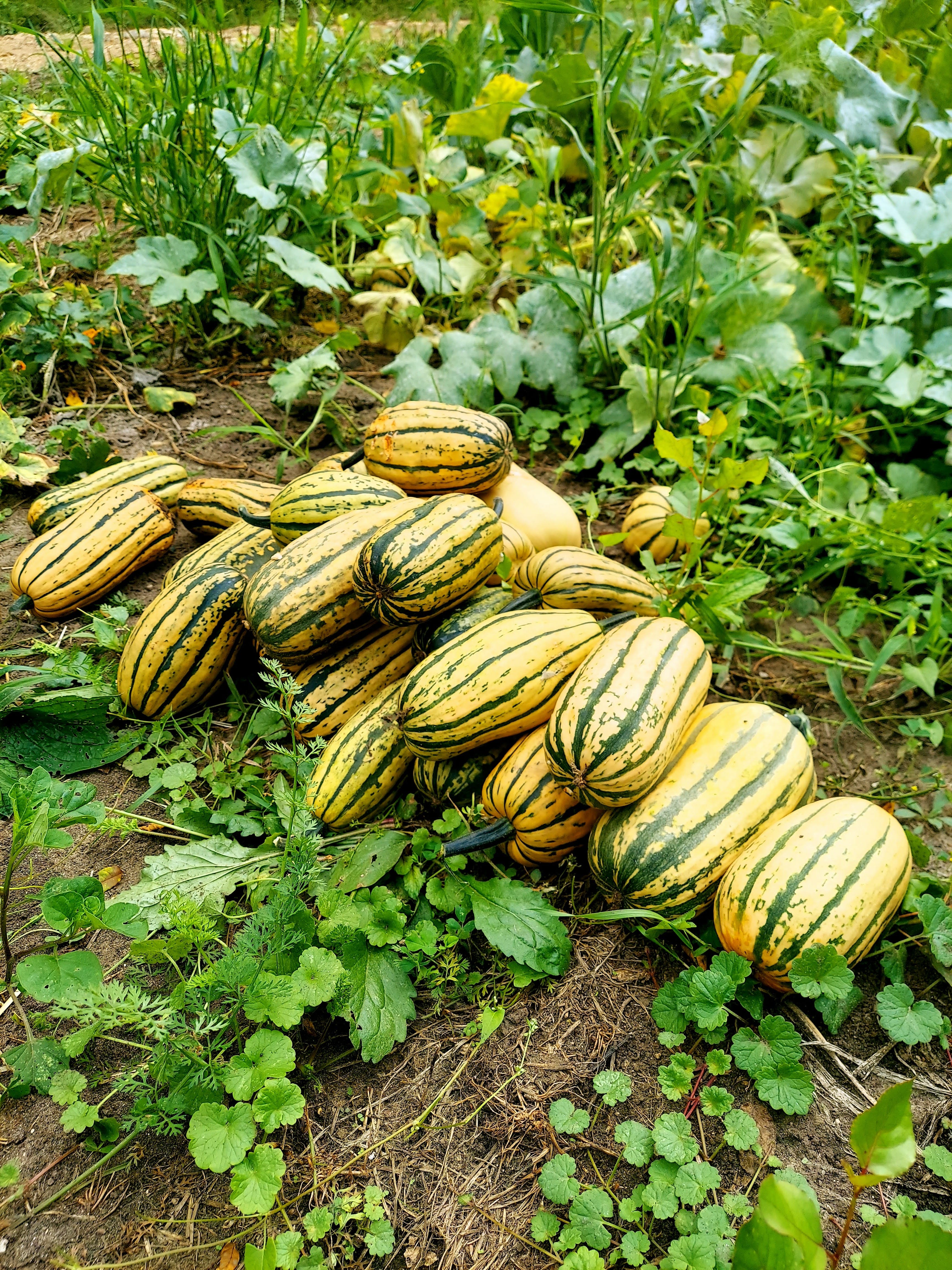
My major takeaway from volunteering in the church garden was that a garden needs a gardener. Not having consistent hands in the soil led to uneven watering, pests got out of control (R.I.P broccoli), weeding became overbearing and some veggies went to the worms because they were never harvested. Starting small and managing that well before expanding would have been wiser. A fence would help too. All lessons I took with me when we moved 4 hours north to our 11-acre homestead.
So, what happened this year? Morning sickness knocked me on my butt last spring, and my only goal was to survive. As the saying goes, there is always next year.
I wrote a farm to table recipe blog not too long ago but ultimately decided to stop posting. The main reason being the whole SEO game leaves a bad taste in my mouth. All the titles feel the same. “Best soup…” “The only recipe you need...” blah blah blah. I understand that “half ass chili” isn’t going to get many views but I just don’t feel comfortable writing a certain way just to be seen. Eating cold food because I had to photograph it first got old as well. My blog did open doors for me. I got a sweet gig developing recipes for local farms. I say all this to make this simple point: My Substack won’t be recipe focused but rather organically entwined with seasonal food. I’m not selling you my recipes, I am genuinely sharing. Hope you make my recipes, feel inspired by the ingredients or go ahead and screen shot it and never make it— That’s cool too.
Soup is a hot topic in our house. I could eat it as a meal. My husband could too— as long as it comes with a side of steak and potatoes. I’ve decided that my level of love for soup is higher than his, so I mostly keep it for myself. Since the weather has required me to wear a jacket, I’ve been making a pot of soup to have throughout the week. This week, I made an old favorite, roasted squash soup. I hope one day to make this with my own homegrown squash.
Ingredients:
½ stick butter (4tbsp)
2 tbsp Olive oil
1 sprig rosemary
6 leaves sage + 2 for topping (optional)
1 sweet onion, diced
2 garlic cloves, smashed
1 tsp salt (Redmond’s Real Salt)
½ tsp red chili flakes
¼ tsp course ground pepper
4 cups roasted squash puree (mix of honeynut, hubbard, butternut, delicata, etc.)
1 tsp oregano
½ tsp thyme
2 cups chicken broth, warmed
1 ¼ cup heavy cream
Directions: Over medium heat, add butter and oil to a Dutch oven. When hot, but not smoking, add sage and rosemary. Fry until crispy. Careful not to burn. If burned, start over. Set sage and rosemary aside to cool. Add onion. Cook 5-7 minutes until softened. Add garlic cloves, salt, and red pepper red chili flakes. Cook until fragrant. Crunch the fried sage and rosemary. Discard stems. Add to pot. Add squash puree, oregano, thyme, broth and cream. Bring to a simmer. Simmer for around 15-20 minutes, stirring once in a while. If splattering is a problem, cover with a lid but set to lowest temperature. Blend. Use a blender for an ultra-smooth texture. (I wait for the soup to cool before blending, but you may have a better blender than me). Return to pot to simmer for 15-20 minutes.
Fry the last two sage leaves in oil if you want to add a chef’s touch. Serve with sourdough bread for dipping.